Ramón Novarro (1899-1968) – Beyond the Latin Lover
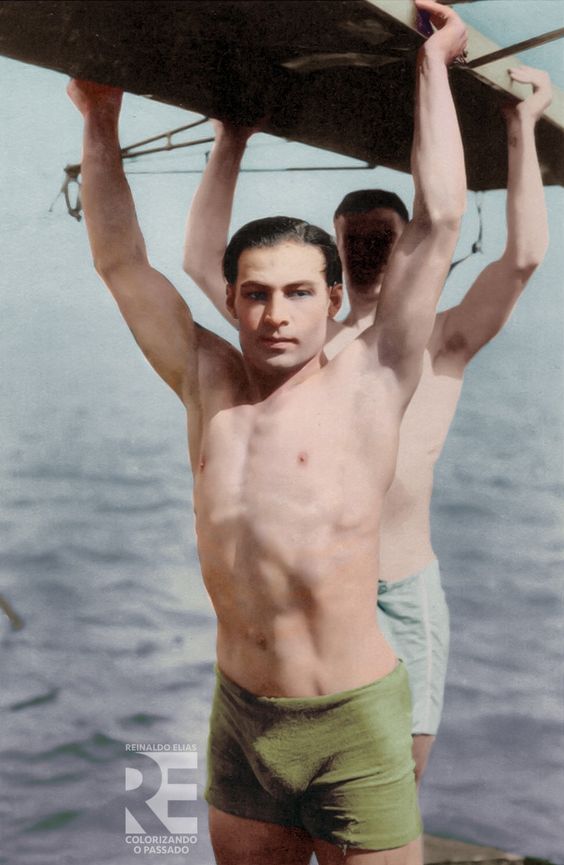
Ramón Novarro, born José Ramón Gil Samaniego on February 6, 1899, in Durango, Mexico, was a figure of immense talent and quiet complexity. He rose to international stardom as a “Latin Lover” rivalling Rudolph Valentino, yet his life was marked by both dazzling public success and profound personal struggles.
Early Life and Aspirations: Novarro hailed from an influential and affluent Mexican family. He was the seventh of thirteen children born to Dr. Mariano N. Samaniego, a dentist, and Leonor Pérez Gavilán. The family’s deep Catholic faith led several of his sisters to become nuns, and Novarro himself briefly considered the priesthood. However, his innate artistic inclinations – including a talent for dance, singing, piano, and even track athletics – drew him towards the performing arts. In 1913, the Samaniego family relocated to Los Angeles, California, seeking refuge from the turmoil of the Mexican Revolution. In his early years in the U.S., Novarro took on various jobs, including waiting tables and ushering, while pursuing his dream of acting.
Rise to Stardom in the Silent Era: Novarro’s Hollywood journey began in 1917 with bit parts in silent films, often uncredited. He supplemented his income by performing as a singing waiter and dancer. His striking good looks and expressive presence quickly caught the eye of influential figures like director Rex Ingram and his wife, actress Alice Terry. Ingram became Novarro’s mentor, recognizing his potential beyond the typical “Latin Lover” stereotype. It was Ingram who suggested he adopt the professional name “Novarro.”
His breakthrough came with a prominent role in Ingram’s The Prisoner of Zenda (1922). This was swiftly followed by Scaramouche (1923), which solidified his status as a leading man. However, it was his starring role as Judah Ben-Hur in MGM’s monumental epic Ben-Hur: A Tale of the Christ (1925) that catapulted him to unparalleled international fame. The film’s revealing costumes and Novarro’s athletic physique caused a sensation, establishing him as a top box-office attraction and, at one point, MGM’s highest-paid male star, reportedly earning $10,000 per week. He rivaled Rudolph Valentino for romantic leads and continued to shine in films like Ernst Lubitsch’s The Student Prince in Old Heidelberg (1927) and Across to Singapore (1928).

Transition to Sound and Career Evolution: Unlike many of his silent-era peers, Novarro successfully navigated the transition to “talkies.” His trained tenor voice proved to be an asset, and he starred in his first talking film, Devil-May-Care (1929), as a singing French soldier. He continued to appear in musicals and dramas, notably alongside Greta Garbo in Mata Hari (1931) and Myrna Loy in The Barbarian (1933).
By the mid-1930s, however, his leading man status began to decline. Changing audience tastes, the emergence of new Hollywood heartthrobs, and a potential reluctance to fully conform to increasingly demanding studio expectations contributed to fewer prominent roles. After his contract with MGM expired in 1935, it was not renewed. He continued to act sporadically in smaller films for studios like Republic Pictures, and also explored roles in Mexican and French productions.
Personal Life and Challenges: Throughout his life, Ramon Novarro grappled with the profound conflict between his devout Roman Catholic faith and his homosexuality, a sexuality that was then both socially taboo and legally punishable. He maintained an extremely private life, never publicly acknowledging his sexual orientation, a common necessity for stars of his era. He had romantic relationships with several men, including Harry Partch, Herbert Howe, and Noël Sullivan. This internal struggle is often cited as a contributing factor to his lifelong battle with alcoholism. Despite his immense wealth, he lived a relatively modest and private existence, investing shrewdly in real estate (including his notable Lloyd Wright-designed home, the Samuel-Novarro House). He was known for his generosity towards his family and various charitable causes.
Later Career and Tragic Death: In the 1940s and 1950s, Novarro took on small roles in American films, including John Huston’s We Were Strangers (1949). He found renewed work in the burgeoning medium of television in the late 1950s and 1960s, making appearances in popular series such as Bonanza, Dr. Kildare, and The Wild Wild West.
On October 30, 1968, Ramon Novarro’s life came to a shocking and tragic end. At the age of 69, he was brutally murdered in his North Hollywood home by two brothers, Paul and Tom Ferguson, who had come to his house ostensibly for sex but then robbed and beat him. The cause of death was asphyxiation. His untimely and violent death sent shockwaves through Hollywood and cast a somber shadow over his illustrious career.
Legacy: Ramon Novarro’s legacy is multifaceted. He remains celebrated as the first Latin American actor to achieve widespread stardom in Hollywood, paving the way for future generations. His performances in silent films, particularly Ben-Hur, are iconic. His personal story, though tragic, has come to symbolize the immense pressures faced by gay individuals in early Hollywood, and his quiet dignity in a challenging era continues to resonate.
Life Timeline of Ramón Novarro
February 6, 1899: Born José Ramón Gil Samaniego in Durango, Mexico.
1913: His family flees the Mexican Revolution and settles in Los Angeles, California.
1917: Begins his film career with uncredited bit parts, supplementing income as a singing waiter and dancer.
1921: Appears in A Small Town Idol (uncredited) and The Four Horsemen of the Apocalypse (uncredited).
1922: Gains recognition in Rex Ingram’s The Prisoner of Zenda and adopts the professional name Ramon Novarro.
1923: Achieves major success with his starring role in Ingram’s Scaramouche.
1924: Stars in The Arab, solidifying his “Latin Lover” image.
1925: Stars as Judah Ben-Hur in MGM’s Ben-Hur: A Tale of the Christ, becoming an international superstar and MGM’s highest-paid male star.
1926: Becomes Hollywood’s top “Latin Lover” after the death of Rudolph Valentino.
1927: Stars in Ernst Lubitsch’s The Student Prince in Old Heidelberg.
1929: Successfully transitions to sound films with Devil-May-Care, showcasing his singing voice.
1930: Stars in Call of the Flesh and In Gay Madrid.
1931: Stars opposite Greta Garbo in Mata Hari.
1933: Appears opposite Myrna Loy in The Barbarian.
1934: Stars in the musical The Cat and the Fiddle.
1935: His contract with MGM expires and is not renewed; his leading man career begins to decline.
Late 1930s-1940s: Continues to act sporadically in films for other studios (e.g., Republic Pictures) and in theatre.
1949: Appears in John Huston’s We Were Strangers.
1950s-1960s: Works increasingly in television, with guest appearances on shows like Bonanza (1959), Dr. Kildare (1961), Combat! (1962), and The Wild Wild West (1965).
October 30, 1968: Ramón Novarro is murdered in his North Hollywood home at the age of 69.
November 2, 1968: Novarro is interred at Calvary Cemetery in East Los Angeles.