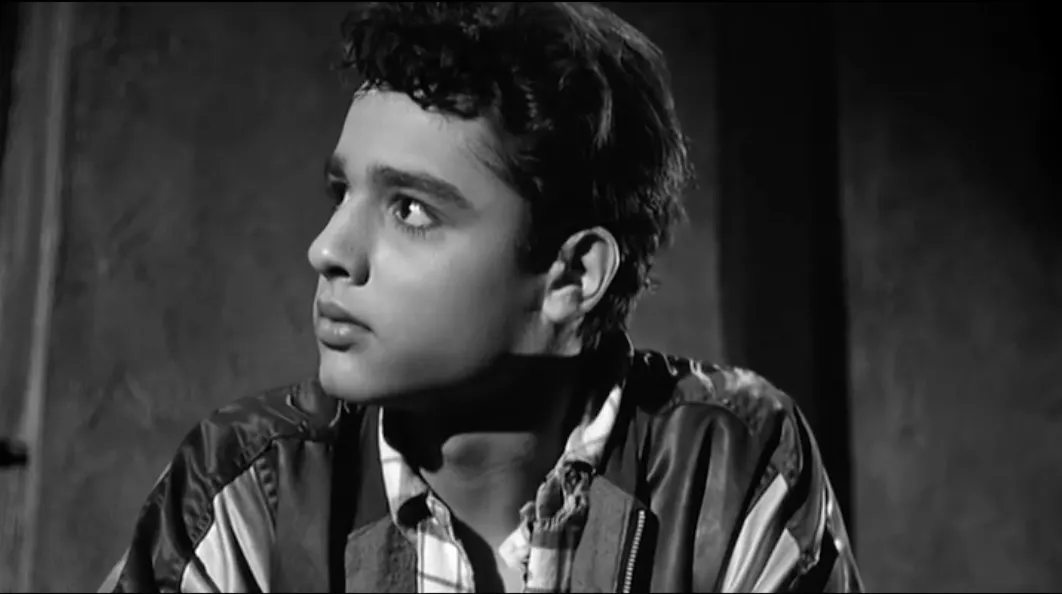
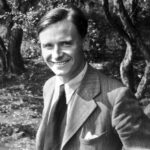
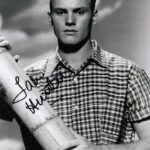
Sal Mineo (Salvatore Mineo Jr.; January 10, 1939 – February 12, 1976) was an American actor best known for his Oscar-nominated supporting turn as John “Plato” Crawford in Rebel Without a Cause (1955) and for his Golden Globe–winning performance in Exodus (1960).
Early Life and Background
Salvatore “Sal” Mineo Jr. was born on January 10, 1939, in The Bronx, New York City, the son of Josephine (née Alvisi) and Salvatore Mineo Sr., coffin makers of Sicilian heritage. He attended the Quintano School for Young Professionals and was enrolled in dance and acting classes at an early age by his mother, launching a child-actor career that included stage work such as The Rose Tattoo (1951) and a role in the stage musical The King and I.
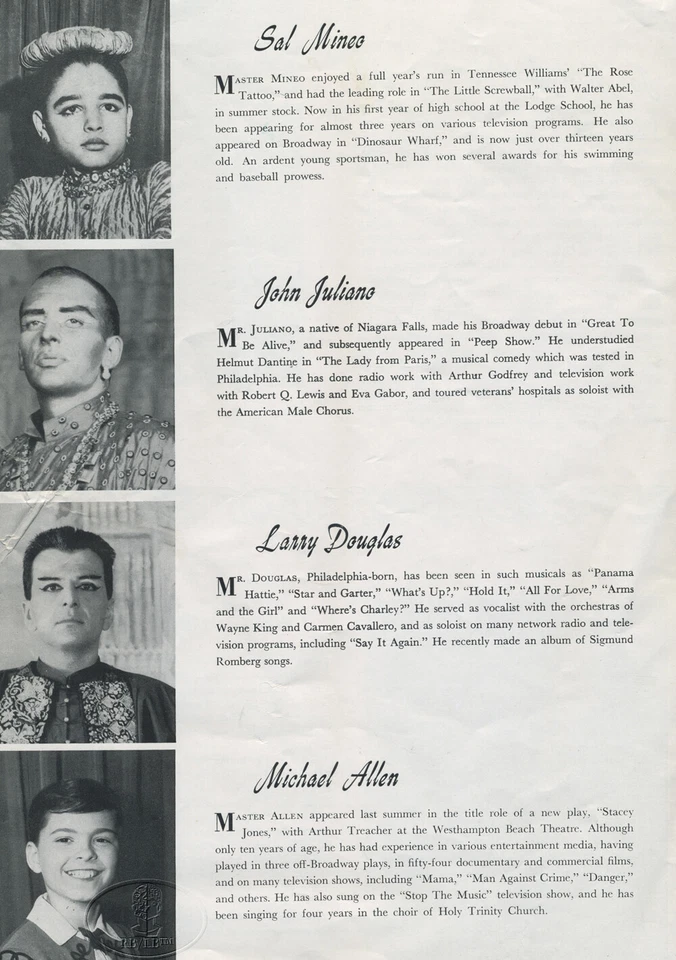
The King and I (1952)
Rise to stardom: teenage years and Rebel Without a Cause
Mineo made his screen debut in the mid-1950s and quickly rose to national prominence with his portrayal of John “Plato” Crawford in Rebel Without a Cause (1955). At 17 he received an Academy Award nomination for Best Supporting Actor for that role, becoming one of the youngest nominees in the category. The role made him an idol to many teen fans and cemented his association with sensitive, troubled-youth characters.
Career in the late 1950s–1960s
Following Rebel, Mineo appeared in a string of films including Crime in the Streets and Giant (both 1956). He also pursued music briefly — recording singles in the late 1950s — and scored two Top-40 hits on the Billboard pop chart; “Start Movin’ (In My Direction)” reached No. 9 and sold over a million copies, earning a gold disc. As he matured, Mineo attempted to broaden his roles (for instance, playing a Jewish Holocaust survivor in Exodus), winning a Golden Globe and receiving a second Academy Award nomination for that performance.
Career challenges and stage work
By the early 1960s Mineo began to face the twin challenges of aging out of teenage roles and industry prejudice regarding rumored aspects of his private life, which affected the roles he was offered. He continued to work steadily in film and television (including The Longest Day and Cheyenne Autumn), appeared in controversial or boundary-pushing parts such as his turn in Who Killed Teddy Bear (1965), and returned to the stage as both actor and director — notably directing a Los Angeles production of the prison-themed play Fortune and Men’s Eyes (1967). In the early 1970s he acted in films like Escape from the Planet of the Apes (1971) and continued television guest spots into the mid-1970s.

Later years, renewed attention, and death
In the mid-1970s Mineo staged a career revival in theatrical roles (including a well-received run in P.S. Your Cat Is Dead). On February 12, 1976, Mineo was murdered in West Hollywood—stabbed to death—at age 37; the assault was fatal (a single stab wound to the heart). He was later interred at Gate of Heaven Cemetery in Hawthorne, New York. Mineo is remembered as one of the iconic juvenile stars of 1950s Hollywood whose best work displayed rare vulnerability and charisma. His image inspired later visual art (he was the model for Harold Stevenson’s The New Adam, now in the Guggenheim collection), and his performances in Rebel Without a Cause and Exodus remain the centerpieces of his legacy. His public acknowledgment of bisexuality in the 1970s and later discussions of his life have made him a figure of particular interest in studies of sexuality and stardom in mid-century Hollywood.
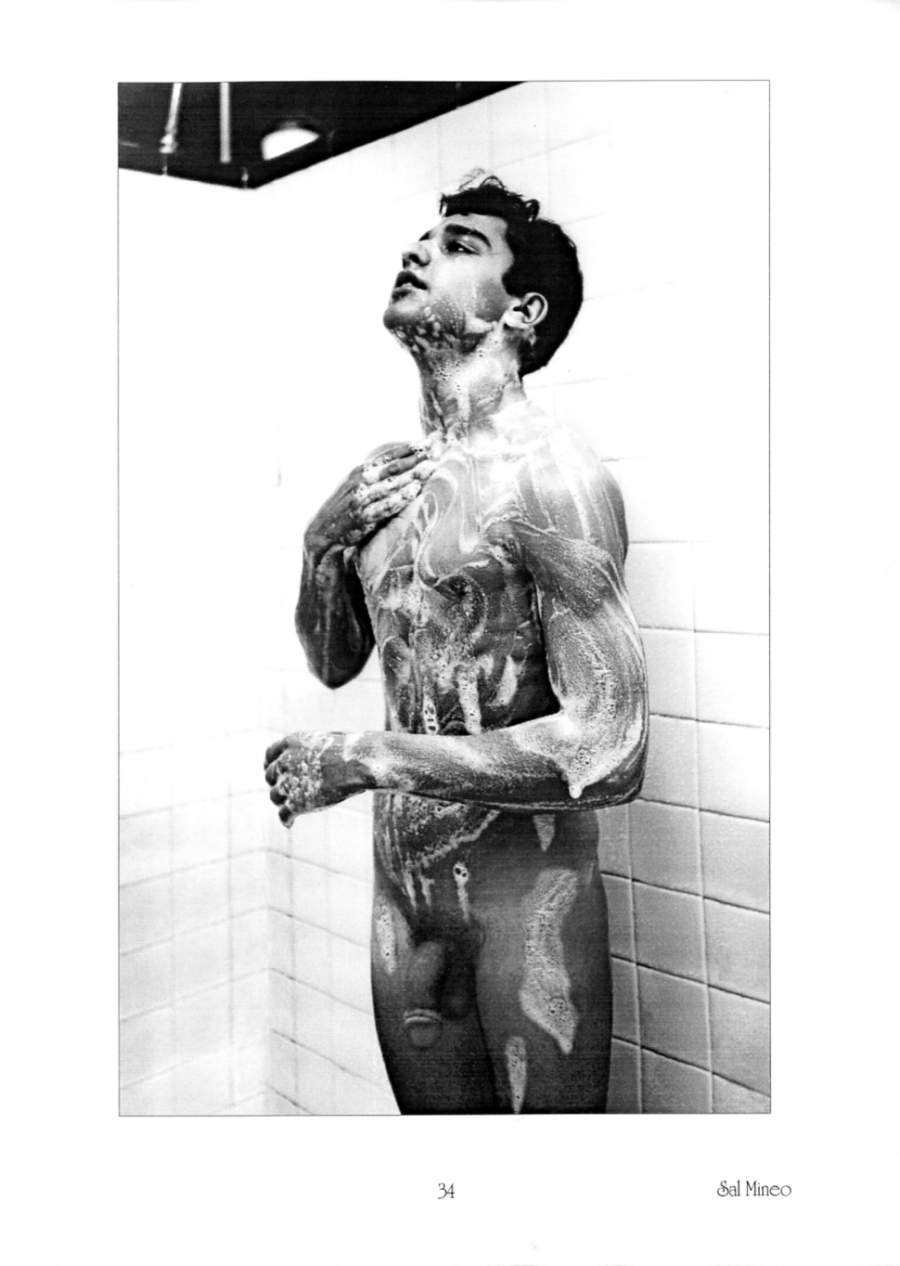
Complete Filmography
| Year | Title | Role | Director | |
|---|---|---|---|---|
| 1955 | Six Bridges to Cross | (screen debut, role not specified on lead) | Joseph Pevney | |
| 1955 | Rebel Without a Cause | John “Plato” Crawford | Nicholas Ray | |
| 1956 | Crime in the Streets | Angelp Gioia | Don Siegel | |
| 1956 | Giant | Angel Obregon II | George Stevens | |
| 1958 | Tonka | White Bull | Lewis R Foster | |
| 1959 | The Gene Krupa Story | Gene Krupa (younger) | Don Weis. | |
| 1960 | Exodus | Dov Landau | Otto Preminger | |
| 1962 | The Longest Day | Pvt. Martini | Ken Annakin, Andrew Marton, Gerd Oswald | |
| 1964 | Cheyenne Autumn | Red Shirt | John Ford (film noted as Ford’s final western) | |
| 1965 | Who Killed Teddy Bear | Larry Sherman | Joseph Cates | |
| 1971 | Escape from the Planet of the Apes | Dr. Milo (chimpanzee role) | Don Taylor |
Television
Guest and recurring TV appearances included Jukebox Jury (as a teen), What’s My Line? (celebrity guest challenger, 1957), guest spots on Combat!, The Patty Duke Show (Season 2: “Patty Meets a Celebrity”, 1964), Columbo (“A Case of Immunity”, 1975), and S.W.A.T. (1975). Details, episode titles, and air dates are cited to Wikipedia.
Stage credits
The Rose Tattoo (1951) — early stage appearance.
The King and I — played the young prince; Yul Brynner helped mentor him.
Directed Fortune and Men’s Eyes (Los Angeles production, 1969) — also acted in it.
Directed Gian Carlo Menotti’s The Medium (short opera) in Detroit (Dec 1972) and had stage roles such as Toby in that production.
Discography / Recordings
Singles in late 1950s; “Start Movin’ (In My Direction)” reached No. 9 on the Billboard pop chart and sold over a million copies (gold disc). Wikipedia lists two Top-40 singles.
Awards & Nominations
Academy Award nomination, Best Supporting Actor — Rebel Without a Cause (1955).
Golden Globe Award — won for Exodus (1960) and received a second Academy Award nomination for the same film.
Personal life
Mineo publicly confirmed his bisexuality in a 1972 interview with Boze Hadleigh. four years prior to his death, Mineo was open about his bisexuality. Having been in long- and short-term relationships with both men and women, Mineo expressed his belief that more people would identify as bisexual if not for societal taboo. While some speculate that Mineo may have been more likely to identify as gay as societal understandings of sexuality have evolved in the time since his passing, out of respect for his self-identification throughout his life, I will continue to refer to him as bisexual. There has also notes that rumors concerning his sexuality affected casting decisions in Hollywood during the 1960s.
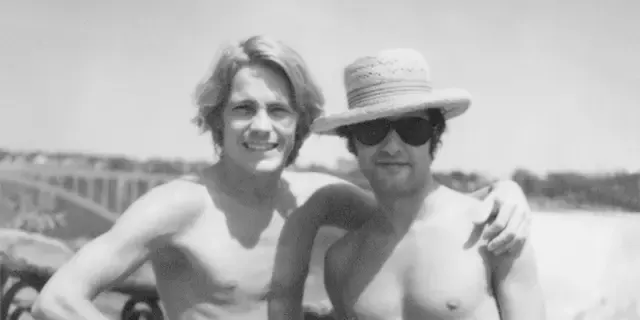
- Sal was in a relationship with actor Courtney Burr III for six years at the time of his death. Burr was also a retired acting coach. They were together for six years at the time of Mineo’s murder in 1976. Burr and Mineo had a close relationship, and Burr shared his personal diaries and recollections with author Michael Michaud for a biography about Mineo.
Death
Date & location: February 12, 1976 — West Hollywood, California. Cause: murder (stab wound to the heart). He was 37 years old. He is buried at Gate of Heaven Cemetery, Hawthorne, New York.
Legacy & Significance
Sal Mineo’s legacy is that of a talented actor who, despite facing career limitations due to typecasting, was also a pioneer in openly embracing his bisexuality during a time when it was not widely accepted in Hollywood. His role as Plato in Rebel Without a Cause is considered one of the first gay teenagers in film, and his later work and public statements reflected his authentic self.
- Sal’s early films — most notably Rebel Without a Cause and Exodus — remain culturally significant as touchstones of 1950s Hollywood youth cinema and his performances are still cited in retrospectives. He was the model for Harold Stevenson’s The New Adam (1963), now part of the Guggenheim Museum’s permanent collection, and his life and career are often discussed in the context of queer histories of Hollywood.
- His life and career became a symbol of the struggles faced by LGBTQ+ individuals in Hollywood during that time.
Short Timeline
1939 — Born in The Bronx, New York City.
Early 1950s — Stage appearances (e.g., The Rose Tattoo, The King and I).
1955 — Screen breakthrough in Rebel Without a Cause; Academy Award nomination.
Late 1950s — Charting pop singles (Top 40), Giant, Crime in the Streets.
1960 — Exodus; Golden Globe and second Academy Award nomination.
1967–1970s — Stage directing (e.g., Fortune and Men’s Eyes), TV guest roles; attempted career reinvention.
1976 — Murdered in West Hollywood.